

Quick Answer
Perimenopause is the stage before menopause when ovulation and hormone patterns begin to change. Common perimenopause symptoms include changing periods, hot flashes, night sweats, disrupted sleep, mood changes, vaginal dryness, discomfort during sex, and urinary changes. Poor sleep may also leave you feeling tired or less able to concentrate.
Care plans look different for every woman. Depending on your symptoms and health history, your provider may discuss daily habit changes, nonhormonal options, FDA-approved hormone therapy, or a patient-specific compounded prescription. When customization is appropriate, your prescriber can specify the formulation, and Morgan Compounding can prepare it.
What Is Perimenopause?
Perimenopause means “around menopause.” It’s the natural transition leading up to menopause and usually begins in the mid-40s, although it can start earlier. It lasts about four years on average, but some women experience a shorter or longer transition.
During perimenopause, estrogen and progesterone levels can fluctuate, and ovulation may become less predictable. As the ovaries produce fewer hormones, periods may become irregular, and symptoms may come and go.
By definition, you reach menopause after 12 consecutive months without a menstrual period. Until then, you may still become pregnant, even if your cycles become irregular.
What Can Perimenopause Symptoms Look Like?
Perimenopause can look different from one woman to the next. Symptoms may overlap, ease for a while, or return later. Common concerns include changing bleeding patterns, hot flashes, sleep or mood changes, and vaginal or sexual symptoms.

Period, temperature, sleep, and mood changes
You may notice:
- Periods arriving earlier or later
- Heavier, lighter, longer, or shorter periods
- Occasionally skipped cycles
- Hot flashes or night sweats
- Trouble sleeping or waking during the night
- Mood changes or increased irritability
These changes can appear in different combinations. A restless night may also leave you feeling drained or less patient the next day.
Although menstrual changes are common during perimenopause, contact your healthcare provider about very heavy bleeding, bleeding between periods, bleeding after sex, or any bleeding after menopause.
Vaginal, sexual, and urinary changes
Some women may also experience:
- Vaginal dryness or irritation
- Discomfort during sex
- Urinary urgency
- Burning or discomfort with urination
Healthcare providers group these genital, sexual, and urinary symptoms under the term genitourinary syndrome of menopause or GSM.

These concerns can feel awkward to mention, but they are valid healthcare topics. Your provider can consider whether they relate to perimenopause or another condition before discussing care options.
What Should You Discuss With Your Healthcare Provider?
You do not need to arrive at your appointment with a specific hormone or dosage form in mind. Start by giving your provider a clear picture of what has changed and how those changes affect your daily life.
It may help to bring notes about:
- Symptom timing and frequency
- Menstrual changes
- The symptoms affecting daily life most
- Medications, supplements, and medical history
- Questions and care goals
A symptom log can make these conversations easier and may give your provider a better sense of the pattern than simply saying you do not feel like yourself.

What May Help With Perimenopause Symptoms?
After reviewing your symptoms, health history, and goals, your provider may discuss several ways to manage the changes you are experiencing. No single approach fits every woman.
Options may include:
- Changes to sleep, exercise, nutrition, or stress routines
- Identifying and reducing personal hot-flash triggers
- Vaginal moisturizers, lubricants, or hyaluronic acid gels
- Nonhormonal prescription medications for hot flashes and night sweats
- Local vaginal hormone options
- FDA-approved hormone therapy
- A compounded prescription when an available manufactured option does not meet a specific need
Hormone therapy may help with hot flashes, night sweats, and certain genitourinary symptoms, but the decision is individual. The hormone, dose, route, timing, and duration should reflect your symptoms, medical history, risk factors, preferences, and care goals.
When Might a Compounded Hormone Prescription Be Considered?
Commercially manufactured medications meet the needs of many women. However, a provider may consider a compounded prescription when an available manufactured product does not meet a specific patient need.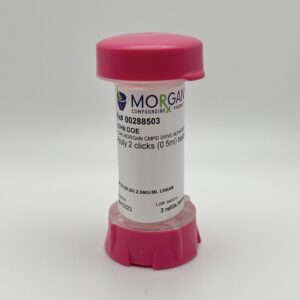
For example, a patient may need:
- A different strength
- A dosage form that is easier to use
- A specific combination of ingredients
- An ingredient profile that avoids something she cannot tolerate
When a provider prescribes a compounded hormone formulation, Morgan Compounding Pharmacy may prepare it with estradiol, progesterone, testosterone, DHEA, or a provider-specified combination such as Bi-Est or Tri-Est.
Available dosage forms may include:
- Oral or slow-release capsules
- Topical creams and gels
- Troches or rapid-dissolve tablets
- Vaginal creams and gels
The prescriber determines the medication, strength, dosage form, and directions based on the patient’s symptoms, health history, and clinical needs. Morgan Compounding’s pharmacists prepare the prescription and may answer questions about administration, storage, and handling.
Compounded medications are not FDA-approved. A pharmacist prepares each compounded medication for an individual patient according to a valid prescription from a licensed healthcare provider.
For Georgia Prescribers
Morgan Compounding Pharmacy provides women’s health prescription resources and pharmacist support for Georgia prescribers. Providers may contact the pharmacy to discuss dosage forms, ingredient options, and formulation capabilities before submitting a prescription.
Our compounding process also includes preparation-specific equipment, USP-certified ingredients, and multiple quality checks. For creams and gels, we use equipment that supports even mixing and consistency.
How Does Morgan Compounding Pharmacy Support Patients?
Morgan Compounding Pharmacy serves Alpharetta, Roswell, Milton, Johns Creek, Atlanta, and surrounding Georgia communities.
When a licensed provider sends a customized hormone prescription, our pharmacists prepare the medication according to the prescription and may answer questions about dosage forms, administration, storage, and handling.
Patients should begin by discussing their symptoms and care options with a healthcare provider. If a customized prescription becomes part of the care plan, Morgan’s pharmacists are available to support the prescription and compounding process.

Frequently Asked Questions About Peptide Supplements and Wellness Products
What are early perimenopause symptoms?
A change in your menstrual cycle is often one of the earliest signs. Periods may arrive sooner or later, become heavier or lighter, or occasionally skip a month. Some women also notice hot flashes, night sweats, disrupted sleep, vaginal dryness, or mood changes.
Can perimenopause symptoms come and go?
Yes. Estrogen and other hormone levels can fluctuate throughout perimenopause, so symptoms may ease, return, or change in intensity over time.
Does Morgan Compounding Pharmacy prescribe hormone therapy?
No. A licensed healthcare provider evaluates your needs and writes the prescription. Our pharmacists prepare the medication according to the provider’s instructions.
Can my provider contact Morgan Compounding before prescribing?
Yes. Georgia prescribers can contact our pharmacists to discuss dosage forms, ingredient options, formulation capabilities, and prescription resources before sending a prescription.
Do compounded hormone medications require a prescription?
Yes. We prepare compounded hormone medications only after receiving a valid prescription from a licensed healthcare provider.
Is a compounded prescription right for every woman in perimenopause?
Not necessarily. Manufactured medications meet the needs of many women. A provider may consider compounding when a patient needs a different strength, dosage form, ingredient combination, or ingredient profile.
Does Morgan Compounding Pharmacy offer at-home hormone saliva test kits?
Yes. Morgan Compounding offers at-home saliva test kits and can answer questions about collection instructions and available hormone panels. A saliva test does not independently diagnose perimenopause, and patients and providers should not use the results alone to select or adjust hormone therapy. Share your results with a licensed healthcare provider, who can review them alongside your symptoms, health history, and any other clinically appropriate evaluation.
References
- Brady, P. H., Gin, G. T., Rosenblum, E., & Wilkinson, L. D. (2022). Female Pelvic Conditions: Genitourinary Syndrome of Menopause. FP essentials, 515, 32–42. Link
- Delamater, L., & Santoro, N. (2018). Management of the perimenopause. Clinical Obstetrics & Gynecology, 61(3), 419–432. Link
- Faubion, et al. (2022c). The 2022 hormone therapy position statement of The North American Menopause Society. Menopause the Journal of the North American Menopause Society, 29(7), 767–794. Link
- Perimenopause. (2026, June 23). Cleveland Clinic. Link
- Perimenopausal bleeding and bleeding after menopause. (n.d.). ACOG. Link
- U.S. Food and Drug Administration. (2025, September 16). Compounding and the FDA: Questions and answers. Link