
Quick Answer
Low dose naltrexone (LDN) uses naltrexone at doses much lower than the commercially available 50 mg tablet. These lower strengths and certain dosage forms are not typically available as standard products. A compounding pharmacy can prepare LDN in the strength and form that a licensed prescriber orders. Morgan Compounding Pharmacy compounds LDN for patients across Georgia.
Key Takeaways
- LDN uses the same medication as standard naltrexone at much lower doses; it is not a separate drug.
- Compounding gives prescribers access to lower strengths, titration options, and dosage forms that are not typically available as standard products.
- LDN is used off-label and research remains developing, so patients should discuss medications, recent opioid use, possible side effects, and dose changes with their prescriber.
What Is Low Dose Naltrexone and Why Is It Compounded?
Naltrexone is an opioid receptor antagonist that the FDA has approved for alcohol dependence and for blocking the effects of opioids. Low dose naltrexone uses the same medication at much smaller doses for off-label purposes. A 2026 review describes LDN doses of about 0.5 mg to 6 mg per day, compared with the commercially available 50 mg tablet.

Compounded LDN: Strengths and Dosage Form Options
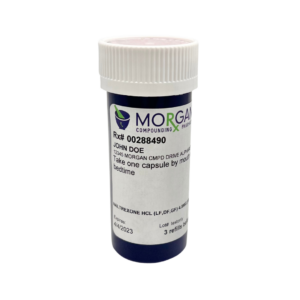
Compounding gives prescribers more control over LDN strength and dosage form. This may help when a prescription calls for gradual titration, a custom strength, or an alternative dosage form based on the patient’s needs.
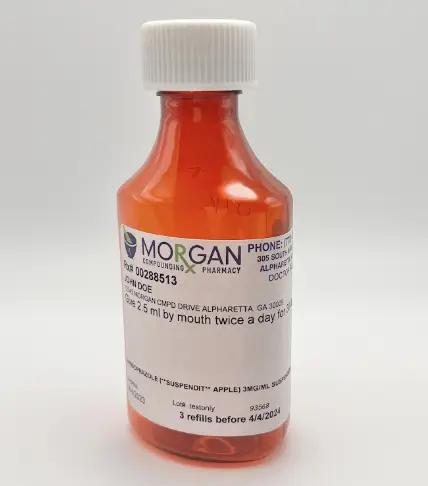
Morgan Compounding Pharmacy prepares LDN in multiple strengths and dosage forms. Current oral options include vegetable capsules and oral solution. Depending on the prescription, Morgan Compounding also prepares topical formulations with ingredients such as glutathione, vitamin D3, cyanocobalamin, or combinations of these ingredients.
- Adjust strengths for titration and maintenance
- Prepare formulas without dyes, gluten, or certain other inactive ingredients
- Use alternative dosage forms, including troches or lozenges
- Add flavoring to oral liquid preparations

LDN Options for Georgia Prescribers
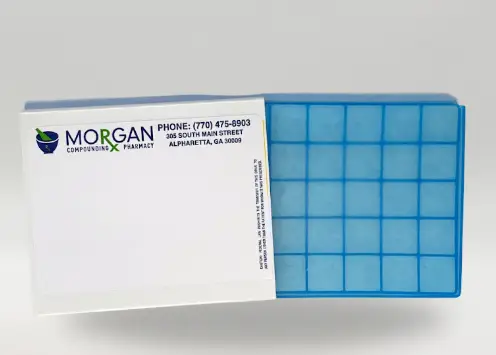
For Georgia prescribers, Morgan Compounding offers structured titration options, multiple oral strengths, and selected oral and topical dosage forms for patient-specific LDN prescriptions.| Prescribing Option | Available Choices |
| Capsule Titration | 1 mg and 1.5 mg titration protocols |
| Oral Strengths | 0.5 mg, 1 mg, 1.5 mg, 2 mg, 3 mg, 4 mg, 4.5 mg, or custom strength |
| Oral Dosage Forms | Vegetable capsule or oral solution |
| Topical Formulations | Naltrexone HCl 0.5% formulations with glutathione, vitamin D3, cyanocobalamin, or selected combinations |
What Does Current Research Say About Low Dose Naltrexone?
Researchers have studied LDN across several clinical areas, but the strength of the evidence varies considerably by condition. A 2026 review evaluated 105 studies, including 15 randomized controlled trials. The authors found that much of the available literature still consists of small studies, case reports, and observational research. The studies below help explain why LDN continues to receive attention, while also showing why researchers continue to call for stronger evidence.
| Research Area | Evidence Discussed | Reader-Friendly Context |
| Chronic pain and neuroimmune signaling | 2014 review | Examined proposed mechanisms involving neuroimmune signaling; proposed mechanisms do not establish clinical benefit |
| Crohn’s disease | 2011 randomized placebo-controlled study; 40 adults | Reported differences in clinical activity and endoscopic findings; the study was relatively small |
| Psoriasis | 2018 case report; one adult | Reported improvement in one patient; a case report cannot establish how broadly the result applies |
| Painful diabetic neuropathy | 2021 randomized crossover study; 67 adults | Compared LDN with amitriptyline and reported similar changes in pain scores with fewer adverse events in the LDN group |
These studies help explain why LDN remains an active area of research. However, study size, design, and results vary by condition, and findings in one condition do not establish benefit in another. The 2026 review concluded that current evidence does not support routine clinical use. Any decision to prescribe LDN remains an individualized discussion between the patient and licensed healthcare provider.
What Should Patients Discuss Before Starting LDN?
Before starting LDN, give your practitioner a complete list of medications and supplements, including any current or recent opioid use. Because naltrexone blocks opioid receptors, sharing a complete medication history is especially important.
The 2026 review cited above found that adverse effects across LDN studies were generally uncommon and mild. Researchers most often reported vivid dreams, nausea, and dizziness. Individual responses vary, so patients should discuss possible side effects and medication interactions with their practitioner or pharmacist.
Consider asking:
- Why are you considering LDN for me?
- What strength and dosage form will I start with, and could that change?
- What side effects should I watch for?
- Are there medications or supplements I should avoid or discuss with you?
- How will we decide whether my dose needs to change?

How to Fill an LDN Prescription in Georgia
LDN requires a prescription from a licensed healthcare provider. Once Morgan Compounding receives the prescription, our pharmacists prepare the ordered strength and dosage form and coordinate pickup or shipping. Existing patients can also request refills online or through the Morgan Compounding Pharmacy mobile app.
Prescribers can use the Morgan Compounding LDN Rx Order Form or contact our pharmacists to discuss patient-specific strength, dosage form, or formulation questions.
LDN Compounding at Morgan Compounding Pharmacy in Alpharetta
Morgan Compounding Pharmacy has served Georgia since 1985 from our Alpharetta pharmacy. We support patients and healthcare providers in Alpharetta, Atlanta, Roswell, Sandy Springs, Johns Creek, Marietta, Savannah, Athens-Clarke County, and communities throughout Georgia. Patients and prescribers can contact our pharmacists directly with prescription or formulation questions.Frequently Asked Questions About Low Dose Naltrexone
Why is low dose naltrexone commonly compounded?
Compounding pharmacies commonly prepare low dose naltrexone (LDN) because standard commercial naltrexone products do not typically offer the lower strengths used for LDN prescriptions. Compounding can also give prescribers more flexibility with titration, dosage forms, and patient-specific formulation needs.
What LDN dosage forms does Morgan Compounding Pharmacy offer?
Morgan Compounding Pharmacy prepares LDN in several dosage forms, including vegetable capsules and oral solution. Depending on the prescription, Morgan Compounding Pharmacy may also prepare selected topical formulations. Prescribers can contact our pharmacists to discuss additional patient-specific formulation needs.
Does Morgan Compounding offer LDN titration strengths?
Yes. Morgan Compounding offers structured 1 mg and 1.5 mg titration protocols, along with oral strengths of 0.5 mg, 1 mg, 1.5 mg, 2 mg, 3 mg, 4 mg, and 4.5 mg. Morgan Compounding can also prepare custom strengths when a prescriber orders them.
Can my healthcare provider send an LDN prescription directly to Morgan Compounding Pharmacy?
Yes. LDN requires a prescription from a licensed healthcare provider. After your healthcare provider writes the prescription, they can send it directly to Morgan Compounding Pharmacy. Our pharmacists then prepare the prescribed strength and dosage form. Prescribers can also access our LDN Rx Order Form or contact a pharmacist with formulation questions.
Does Morgan Compounding serve LDN patients outside Alpharetta?
Yes. Morgan Compounding Pharmacy serves patients and healthcare providers throughout Georgia, including Alpharetta, Atlanta, Roswell, Sandy Springs, Johns Creek, Marietta, Savannah, Athens-Clarke County, and other communities across the state.
What side effects have been reported in LDN studies?
A 2026 review of low dose naltrexone research found that adverse effects across LDN studies were generally uncommon and mild. Researchers most often reported vivid dreams, nausea, and dizziness. Individual responses can vary, so patients should discuss possible side effects, current medications, supplements, and recent opioid use with their healthcare provider before starting LDN.
Is low dose naltrexone the same as naltrexone?
LDN is not a separate medication. It uses naltrexone at doses much lower than those typically used with standard commercially available naltrexone products. The term “low dose naltrexone” describes this lower-dose, off-label use of the medication.
How do I get a low dose naltrexone prescription in Georgia?
LDN requires a prescription from a licensed healthcare provider. After a provider determines that LDN is appropriate and writes the prescription, the provider can send it to Morgan Compounding Pharmacy in Alpharetta. Our pharmacists prepare the prescribed strength and dosage form and coordinate pickup or shipping for patients across Georgia.
References
- Bridgman, A. C., & Kirchhof, M. G. (2018). Treatment of psoriasis vulgaris using low-dose naltrexone. JAAD Case Reports, 4(8), 827–829. Link
- Gouda, A. H. K., Aitcheson, N. E. C., & Steadman, K. J. (2026). Low-Dose Naltrexone: What is the Evidence? A Narrative Review. Advances in Therapy, 43(7), 2852–2870. Link
- Smith, J. P., Bingaman, S. I., Ruggiero, F., Mauger, D. T., Mukherjee, A., McGovern, C. O., & Zagon, I. S. (2011). Therapy with the Opioid Antagonist Naltrexone Promotes Mucosal Healing in Active Crohn’s Disease: A Randomized Placebo-Controlled Trial. Digestive Diseases and Sciences, 56(7), 2088–2097. Link
- Srinivasan, A., Dutta, P., Bansal, D., Chakrabarti, A., Bhansali, A. K., & Hota, D. (2021). Efficacy and safety of low‐dose naltrexone in painful diabetic neuropathy: A randomized, double‐blind, active‐control, crossover clinical trial. Journal of Diabetes, 13(10), 770–778. Link
- Younger, J., Parkitny, L., & McLain, D. (2014). The use of low-dose naltrexone (LDN) as a novel anti-inflammatory treatment for chronic pain. Clinical Rheumatology, 33(4), 451–459. Link