

What Bi-Est 80/20 Means for Georgia Women Considering BHRT
Quick Answer
Bi-Est 80/20 is a patient-specific compounded medication containing 80% estriol (E3) and 20% estradiol (E2). The ratio describes the blend, not the total dose. A prescriber separately specifies the total strength, dosage form, amount, and schedule. Morgan Compounding’s Georgia Women’s Health Rx form lists capsules, cream, gel, troches, and rapid-dissolve tablets. Compounded Bi-Est is not FDA-approved. No FDA-approved drug currently contains estriol.
Key Takeaways
- The 80/20 designation means 80% estriol and 20% estradiol.
- The ratio does not identify the total strength, amount, dosage form, or dosing schedule.
- The same ratio may be prescribed in different strengths and dosage forms based on a patient-specific prescription.
What Is Bi-Est?
Bi-Est is a compounded combination of two estrogens: estriol (E3) and estradiol (E2). The “Bi” refers to the two estrogens included in the formulation.
A provider may consider Bi-Est as part of bioidentical hormone replacement therapy, often called BHRT. The term bioidentical describes hormones that are chemically identical to hormones produced by the human body. It does not mean that a medication is automatically compounded or FDA-approved. Bioidentical hormones may be available as FDA-approved products or as patient-specific compounded medications.
How the Bi-Est 80/20 Ratio Works
When women first see “80/20” on a Bi-Est label, it may look like the dose. However, the ratio simply shows how the two estrogens are divided. Estriol makes up 80% of the blend, while estradiol makes up the remaining 20%.
For example, if the total amount of combined estrogen is 1 mg, the blend would include:
- 0.8 mg of estriol
- 0.2 mg of estradiol
This example only shows how the ratio breaks down. It does not recommend a dose.
Two women may receive the same 80/20 ratio but use different formulations. One may use a cream, while another may receive a capsule or troche. The total strength, amount per dose, and schedule may also differ based on each woman’s needs and her prescriber’s directions.
Bi-Est 80/20 or 50/50: What Changes?
A 50/50 blend uses equal proportions of estriol and estradiol. This shifts the balance between the two hormones, but it does not automatically make the formula stronger or better for a particular woman.
The ratio is only one part of the decision. The full formulation and the woman’s overall care plan matter too.
For Georgia prescribers with a specific ratio in mind, our team at Morgan Compounding Pharmacy is here to help. We can discuss the request and review the formulation details with the prescriber before they submit the prescription.
Is Bi-Est FDA-Approved?
No. Bi-Est is a compounded medication and is not FDA-approved. FDA-approved estradiol products are available, but no FDA-approved medication currently contains estriol.
Prescribers generally consider FDA-approved hormone products when they meet the patient’s needs. A prescriber may consider a patient-specific compounded formulation when an available approved product does not provide the required hormone combination, strength, dosage form, or ingredient profile. The FDA does not review compounded medications for safety, effectiveness, or quality before pharmacies dispense them.
Which Bi-Est Dosage Forms Are Available?
Morgan Compounding’s Georgia Women’s Health Rx form lists Bi-Est 80/20 in several dosage forms, including:
- Capsules
- Cream
- Gel
- Troches
- Rapid-dissolve tablets
The ratio alone does not determine the dosage form or total dose. A prescriber separately specifies the strength, dosage form, amount, and directions for the individual patient.
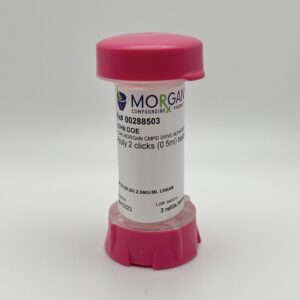
For patients: Follow the strength, amount, dosage form, and schedule shown on the prescription label. Contact the pharmacy with questions about storage, applicators, or administration.
For prescribers: Prescribers may use the Georgia Women’s Health Rx form to communicate the ratio, strength, dosage form, quantity, and directions for a patient-specific prescription.
Why Might a Provider Discuss a Compounded Estrogen Blend?
Perimenopause and menopause can look different from one woman to the next. Common concerns may include:
- Hot flashes and night sweats
- Sleep changes
- Vaginal dryness
- Vaginal discomfort or pain during sex
When a woman brings these concerns to her provider, the conversation usually starts with what she is experiencing and how it affects her daily life. Her overall health and goals then help guide the options her provider may discuss.
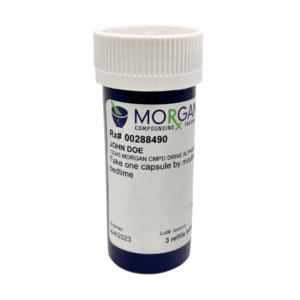
Sometimes, available hormone products do not provide the specific strength, dosage form, or ingredient profile a patient needs. In those cases, a prescriber may discuss whether a compounded estrogen blend may fit her care plan.
How Bi-Est Cream May Fit Into a Woman’s BHRT Plan
Morgan Compounding may prepare some patient-specific Bi-Est prescriptions as topical creams in metered applicators. Patients should follow the application area, number of clicks, and schedule shown on the prescription label. They can contact the pharmacy with questions about the applicator, storage, or administration.
What Women Should Know About Side Effects and Follow-Up
Women may respond differently to estrogen therapy, so it helps to know what to watch for after starting.
- Possible effects include breast tenderness, nausea, spotting, or irregular bleeding.
- A skin-applied hormone cream may cause redness or irritation at the application site.
- Patients should discuss unexpected vaginal bleeding or effects that continue with their prescriber.
- Chest pain, sudden shortness of breath, pain or swelling in one leg, sudden weakness, or changes in speech or vision require immediate medical attention.
Regular follow-ups give a woman and her provider time to review how she feels, how she is responding to therapy, and whether the care plan needs changes.
Bi-Est Prescribing Support in Georgia
Bi-Est is one of the hormone formulations Morgan Compounding prepares pursuant to a patient-specific prescription.
Morgan Compounding Pharmacy works with patients and prescribers in Alpharetta, Roswell, Johns Creek, Milton, and communities throughout Georgia. Prescribers may contact our pharmacists about patient-specific formulation details, while patients may contact the pharmacy with questions about labels, storage, applicators, or refills.

Frequently Asked Questions About Bi-Est 80/20
Do I Need Estrogen After Menopause?
Not every woman needs estrogen after menopause. It may come up when hot flashes, night sweats, sleep changes, vaginal dryness, or discomfort affect daily life.
Some women may use nonhormonal options, while others may discuss hormone therapy with their provider. The decision depends on the symptoms a woman wants to address and her overall health.
Is Bi-Est 80/20 Ratio the Dose?
No. The 80/20 designation explains the proportion of estriol to estradiol. It does not identify the total strength, amount used at one time, dosage form, or dosing schedule.
What Should I Know About Bi-Est 80/20 Side Effects?
Possible effects may include breast tenderness, nausea, spotting or irregular bleeding, and skin irritation with a topical cream.
The ratio alone does not determine how a woman will respond. The total amount, dosage form, and individual response also matter. Patients should discuss effects that continue or feel unusual with their prescriber.
Are Bi-Est 50/50 Side Effects Different?
Current evidence does not clearly show whether Bi-Est 50/50 and 80/20 have different side-effect profiles. The total strength, dosage form, route of administration, other ingredients, and individual risk factors may all affect how a patient responds.
References
- American College of Obstetricians and Gynecologists. (2023, November). Compounded bioidentical menopausal hormone therapy (ACOG Clinical Consensus No. 6). Link
- American Society of Health-System Pharmacists. (2026, May 15). Estradiol topical. MedlinePlus. Link
- University of Maryland Center of Excellence in Regulatory Science and Innovation. (2020, February). Estriol: Clinical use of bulk drug substances nominated for inclusion on the 503B Bulks List. University of Maryland School of Pharmacy. Link
- U.S. Food and Drug Administration. (2023, December 14). Menopause. Link