

Estimated Read Time: 10–12 minutes
Blog Summary:
This blog explains how clomiphene citrate may fit into an individualized approach to low testosterone in men. It begins by outlining common symptoms, then shows how providers evaluate hormone concerns through lifestyle factors, lab markers, and the distinction between signaling-related and production-related low testosterone.
It also compares clomiphene with testosterone replacement therapy (TRT), helping readers understand the difference between supporting the body’s natural hormone signaling and supplying testosterone directly. From there, the article explains the HPT axis in simple terms and shows how clomiphene may support internal testosterone production in certain clinical situations.
The blog then explores the role of compounding, including customized strengths, alternative dosage forms, and formulation adjustments based on patient needs and prescriber goals. Real-world scenarios, ongoing monitoring, and Georgia-specific pharmacy support help connect the science to practical care decisions for both patients and providers.
How Clomiphene May Fit Into Men’s Health Care in Georgia
Low testosterone in men is often linked to symptoms like fatigue, low libido, and brain fog. While testosterone replacement therapy (TRT) is one option, some providers explore alternatives like clomiphene citrate as part of an individualized approach to hormone care.
Providers may consider this approach when lab results suggest the body can still produce testosterone but may need stronger signaling from the brain.
At Morgan Compounding Pharmacy, we support individualized care by preparing custom formulations. Instead of a standard pill, we provide the specific strengths and dosage forms your doctor may prescribe based on your lab results and clinical goals.
What is clomiphene for low testosterone in men?
Clomiphene citrate is a medication sometimes used off-label in men to support natural testosterone production. Instead of supplying testosterone directly, it works by influencing hormone signals between the brain and testes in a way that may support the body’s own testosterone production.
When do doctors consider clomiphene?
Providers may discuss clomiphene for men with low testosterone when:
- Lab results suggest secondary (signal-related) low testosterone
- The body still has the ability to produce testosterone
- Fertility preservation is an important goal
- A patient prefers to support natural hormone signaling rather than replace it
Recognizing the Early Signs of Low Testosterone
Low T rarely shows up as one single problem. Instead, it’s usually a group of symptoms that slowly change how you feel day-to-day. Recognizing these signs is often the reason men start looking for answers about their health and energy levels.
While every man’s experience is different, most notice:
- Persistent Fatigue: Feeling wiped out even if you got a full night’s sleep.
- Brain Fog: Finding it harder to concentrate, stay motivated, or stay sharp at work.
- Physical Changes: Noticing you’re losing muscle or gaining weight around the middle, even if your diet and gym habits haven’t changed.
- Mood and Drive: A noticeable drop in sexual desire, or feeling more irritable and flat than usual.

Why Labs Are the Next Step: From a doctor’s perspective, these symptoms are a starting point. Because things like high stress, poor sleep, or even thyroid issues can mimic low T, these red flags are the reason a provider will order blood work. The goal is to move past how you feel and see exactly what is happening with your hormone signaling.
How Doctors Evaluate Low Testosterone in Men
When symptoms suggest low testosterone, providers don’t rely on a single lab result. Instead, they look at both potential causes and the functioning of the body’s hormone signaling system.
Common Causes of Low Testosterone
Low testosterone is often not a standalone issue. It may reflect broader changes in health or lifestyle, including:

- Sleep and Stress: Poor sleep and chronic stress can interfere with hormone signaling from the brain
- Metabolic Health: Weight changes, insulin resistance, or blood sugar fluctuations may impact hormone balance
- Medical History: Certain medications or underlying conditions can influence testosterone levels.
These factors help providers understand why testosterone levels may be lower — but they don’t tell the full story on their own.
What Lab Testing Shows
To better understand what’s happening internally, providers look at a group of lab markers rather than just total testosterone:
- Total Testosterone: The overall amount circulating in the bloodstream
- Free Testosterone: The portion available for the body to use
- Luteinizing Hormone (LH) and Follicle-Stimulating Hormone (FSH): Signals from the brain that tell the body to produce testosterone (De Silva et al., 2024)
Because hormone levels fluctuate throughout the day, testing is typically done in the morning to reflect natural peak levels.
Interpreting the Results: Two Common Patterns
By combining symptoms, lifestyle factors, and lab results, providers can often identify how the body is functioning:
- Functional (Secondary) Low Testosterone:
The body is capable of producing testosterone, but the signals from the brain are not strong enough - Structural (Primary) Low Testosterone:
The production system itself is less responsive, regardless of signaling
This distinction helps guide the next step — whether the focus is on supporting the body’s internal signaling or considering other approaches.
Clomiphene vs Testosterone Therapy: What’s the Difference?
When evaluating clomiphene for men with low testosterone, one of the most common questions is how it compares to traditional testosterone replacement therapy (TRT). While both approaches are used in men’s health, they work in fundamentally different ways.
Two Different Approaches: Signaling vs Supply
The key difference comes down to how the body receives testosterone support:
Clomiphene (Signaling Support)
Clomiphene works by encouraging the body to produce its own testosterone. It does this by influencing hormone signals between the brain and the testes, helping re-engage the body’s natural production process.
Testosterone Therapy (Direct Supply)
TRT introduces testosterone from an external source, such as injections, gels, or patches. This can raise levels more directly but may, over time, reduce or pause the body’s natural production.
Why This Difference Matters
Because these approaches act on different parts of the hormone system, providers may consider them in different clinical situations:
Fertility Considerations
Clomiphene is often discussed when maintaining fertility is a priority, since it works within the body’s natural signaling loop. TRT, on the other hand, may suppress the signals needed for sperm production.
Underlying Cause of Low Testosterone
If lab results suggest that the body is capable of producing testosterone but not receiving strong enough signals (often called secondary or functional low T), clomiphene may be part of the conversation.
If production itself is limited, providers may look toward direct testosterone therapy instead.
Therapeutic Goals
Some patients prioritize supporting their body’s internal rhythm, while others may need a more direct approach to stabilizing hormone levels. The right option depends on lab patterns, symptoms, and overall health goals.
A Simplified Comparison Between Clomiphene and TRT
| Feature | Clomiphene Citrate | Testosterone Therapy (TRT) |
|---|---|---|
| Primary Action | Supports natural testosterone production | Supplies testosterone directly |
| Hormone Loop | Helps maintain internal signaling | May suppress natural production |
| Fertility Impact | Often preserved | May be reduced |
| Approach | Signal-based | Replacement-based |
Putting It Into Context
In practice, clomiphene for low testosterone men is not viewed as a replacement for TRT — but rather as a different strategy. Providers use lab data, symptoms, and patient goals to determine which path makes the most sense.
For some men, the focus is on supporting the body’s existing capability. For others, the priority may be achieving more immediate hormone stability. This is why individualized evaluation remains central to any care plan.
How Long Does Clomiphene Take to Show Potentially Changes in Men?
The timeline can vary based on individual hormone levels and underlying causes. In many cases, providers monitor changes over several weeks to months through follow-up lab testing and symptom tracking. Because clomiphene works by supporting the body’s internal signaling system, changes may develop gradually rather than immediately.
When Clomiphene Becomes Part of the Discussion
If clinical determination points toward a signaling issue, the angle changes to supporting the body’s natural rhythm. This is where clomiphene citrate enters the conversation as a targeted option.
While some patients first encounter this medication when searching online for Clomid and low testosterone, its clinical application as a Selective Estrogen Receptor Modulator (SERM) is what allows a provider to re-engage the body’s internal hormone production rather than overriding it.
HPT Axis: Understanding Your Body’s Internal Thermostat
For this approach, we look at the Hypothalamic-Pituitary-Testicular (HPT) axis. Think of this as the body’s internal thermostat for testosterone:
- The Brain (The Sensor): The hypothalamus and pituitary gland constantly monitor hormone levels. If they detect a low reading, they release signaling hormones: Luteinizing Hormone (LH) and Follicle-Stimulating Hormone (FSH).
- The Testes (The Generator): These signals act as a start command, telling the body to produce testosterone naturally.
- The Result: A self-regulating loop. Once testosterone and estrogen levels are sufficient, they send a stop signal — known as negative feedback — to the brain to maintain balance (Kaprara & Huhtaniemi, 2017).
Interrupting the Feedback Loop: How Clomiphene Intervenes
Clomiphene citrate modifies how the brain monitors hormone levels by blocking estrogen receptors in the hypothalamus and pituitary gland. This action interrupts the negative feedback loop — the signal that normally tells the system to slow down hormone production (Wheeler et al., 2018).
By blocking this signal, the brain responds as if hormone levels are low, increasing the release of LH and FSH. This may lead the body to produce more of its own testosterone, depending on the individual clinical picture.
In simple terms, clomiphene helps the body “turn back on” its own testosterone signals instead of replacing the hormone from outside.
Supporting Hormone Signals with Compounded Clomiphene
When low T is rooted in HPT axis signaling, men’s health specialists often turn to compounded clomiphene. This collaborative approach allows providers to move beyond standard options and order formulations designed for a patient’s specific clinical profile.
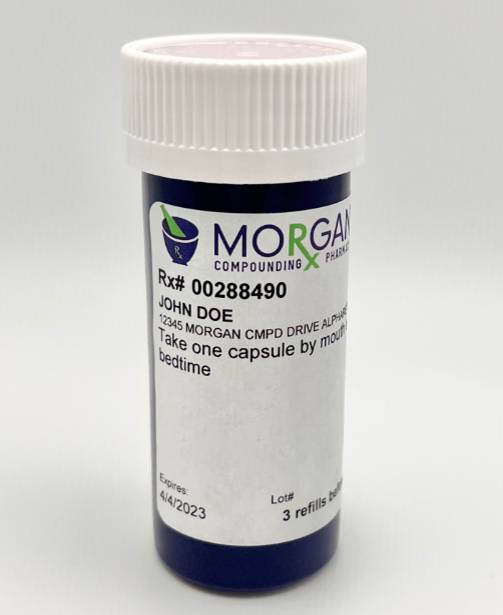
At Morgan Compounding Pharmacy, our team works directly with your provider to fulfill care plans that align with your biological requirements. We specialize in creating custom prescriptions, guided by your doctor, for cases where commercially available medications do not meet the specific criteria.
Combination Therapy and Nutrient Support
We support a multi-faceted approach to men’s health by combining signaling agents with supportive compounds in a single dosage form:
- Clomiphene/Zinc Combinations: We can formulate capsules that combine Clomiphene Citrate with Zinc. This lets the prescriber support the body’s signaling framework while providing essential micronutrients that may support broader hormone-related processes.
- Isomer-Specific Formulations: We provide access to Enclomiphene Citrate, an option for specialists if the goal includes reducing estrogenic feedback.
Tailored Delivery and Compliance
Consistency is the foundation of any successful care plan, particularly with non-daily dosing schedules. Whether your provider prescribes a regimen of three times per week or a specific schedule, our formulations are designed for ease of use.
- Custom Strengths: We prepare medications in the specific milligram increments required to establish a therapeutic range suited to your body.
- Allergen-Free Options: Unlike mass-produced tablets that may contain dyes, preservatives, or gluten, formulations without these additives can be prepared for patients with known sensitivities.
- Alternative Dosage Forms: While capsules are usual, we can provide clomiphene in various forms based on your needs, including sublingual troches or custom-flavored oral liquids.
Compounded medications are not FDA-approved. This means that the FDA does not verify the safety, effectiveness, or quality of compounded drugs before they are marketed. These formulations are prepared by a licensed pharmacist following a prescription from a healthcare provider to meet the specific clinical needs of an individual patient.
Evaluating If This Approach Fits Your Clinical Profile
Your doctor may bring up compounded clomiphene citrate in the discussion based on your clinical presentation, current therapy plan, and fertility considerations. These conversations typically happen when a provider is looking at the bigger picture of your health.
Some of the factors they could consider include:
- Lab patterns suggesting signaling-related (secondary) hypogonadism.
- Test results hinting at your body’s natural testosterone-producing capability.
- Your exploration of testosterone boosting alternatives that support the internal production loop.
- Fertility goals, such as planning to have children or actively trying to conceive.
Role of Compounding in a Clomiphene Care Plan
Beyond being an off-label medication, compounding also allows your doctor to meet specific clinical requirements, including:
- Titration Approach: Your doctor may prescribe low strengths — such as 5 mg or 10 mg — to find a therapeutic range that works for you. A clinical review noted a wide variation in dosing and frequency across male-use literature, suggesting the importance of an individualized approach rather than a fixed formula (Herzog et al., 2020).
- Allergy and Sensitivity Concerns: Your prescriber may order the compounding pharmacy to remove certain ingredients, including dyes and preservatives.
- Oral Dosage Forms: If standard capsules aren’t your preference, your provider may request to have it in sublingual troches or custom-flavored oral liquids to fit your daily routine.
Prioritizing Fertility in Hormone Management
Hormone signaling and reproductive health are closely connected. Because testosterone and sperm production rely on the HPT axis, fertility is a major factor when evaluating hormone care.
Clinical research shows the specific roles of these signaling messengers: LH is primarily tied to testosterone production, while FSH is essential for sperm development (Oduwole et al., 2021). Unlike direct testosterone replacement, which can pause the signals required for fertility, supporting the signaling loop aims to maintain the body’s natural rhythm.
This makes compounding a practical tool for providers who want to support the HPT axis with custom formulations tailored to a patient’s reproductive goals.
For a broader look at hormone care options, including testosterone replacement therapy, see our guide to men’s health and hormone support in Georgia.
Personalized Care in Action: Real-Life Scenarios
To understand how clomiphene in men’s health is applied in a real-world setting, it helps to look at examples of how providers use customization to meet specific patient needs.
Measured Response
David, 37, noticed persistent fatigue and decreased focus. His initial labs showed slightly low testosterone. But his doctor looked deeper: his LH levels were not elevated, his sleep had been inconsistent, and he was under prolonged stress. Instead of moving directly to one approach, the conversation focused on why his levels were low.
Clomiphene citrate became one of the options discussed — alongside lifestyle adjustments and follow-up testing. Because David’s provider wanted a measured nudge to his system, they suggested compounding for customized dosage strength. Alongside monitoring, this allowed the care plan to target the patient’s signaling needs without the limits of the standard formulation.
Simplified Routine
Alex, 39, was already managing a complex daily health regimen, including several supplements like zinc to support his metabolic health and testosterone synthesis. Adding another separate bottle to his counter made his routine feel cluttered and harder to maintain.
During the consultation, the endocrinologist discussed a combination formulation. By merging the specific clomiphene strength with a measured amount of zinc into a single capsule, the care plan became easier to follow. This tailored approach made sure that the medication fit into Alex’s existing lifestyle rather than complicating it.

Step-by-Step Approach to Customizing Your Therapy
When a provider prescribes clomiphene citrate, the dosing and structure vary based on their clinical findings. This is where compounding becomes a practical tool to bridge the gap between a doctor’s strategy and the patient’s specific needs.
Step 1: Evaluation and Planning
Before a care plan is built, your provider looks at the why behind your levels.
- Reviewing Labs and Patterns: Analyzing the relationship between Total T, LH, and FSH to see how your HPT axis is currently communicating.
- Identifying Contributing Factors: Looking at external influences like sleep, stress, and metabolic health.
- Defining Patient Goals: Confirming if the focus is on natural production, managing symptoms, or maintaining fertility.
Step 2: Prescription Customization
Once the plan is in place, the prescription is tailored to the individual.
- Individualized: Created in the specific milligram strength that your provider believes is right for your system.
- Provider-Directed: The doctor can adjust the dose or the frequency (such as three times per week) based on your follow-up results.
- Patient-Focused: Formulated to meet your needs, whether that means removing specific allergens or choosing a unique delivery form like a sublingual troche or liquid.
Step 3: Compounded Preparation
The final step happens at the pharmacy. Morgan Compounding Pharmacy prepares the medication according to your doctor’s exact specifications. This verifies the final formulation is as precise as the clinical evaluation that led to it.
Standard and Customized: A Quick View
In hormone care, the difference between a mass-produced product and a compounded formulation is the level of individualization:
| Feature | Mass-Produced Retail Option | Morgan Compounded Formulation |
|---|---|---|
| Dosing Strength | Fixed, often 50 mg | Precision-dosed, such as 6.25 mg, 12.5 mg, or 25 mg |
| Ingredients | May contain dyes, gluten, or preservatives | Formulated to avoid specific allergens or sensitivities |
| Strategy | Designed for broad, standardized use | Tailored for off-label, signaling-specific care plans |
| Delivery | Limited to standard tablet form | Available in capsules, sublinguals, or liquids |
Monitoring and Ongoing Care
Since the HPT axis is a responsive system, your doctor will periodically evaluate how your body is reacting to signaling support.
During follow-up appointments, providers typically:
- Recheck Signaling Markers: Routine labs — including LH, FSH, and Testosterone — show how the internal feedback loop is adjusting to the medication.
- Track Symptom Patterns: Your doctor will monitor shifts in energy, mental clarity, and drive to see if the clinical markers match how you actually feel.
- Refine the Strength: Because no two men respond identically, your prescriber may adjust the milligram strength or dosing schedule based on your results.
If a follow-up lab suggests a change is needed, your doctor can fine-tune your specific dose with the help of a compounding pharmacist.
For Prescribers: Streamlined Prescribing in Georgia
At Morgan Compounding Pharmacy, we provide custom strengths for both clomiphene and enclomiphene. We offer different strengths to help tailor your care plan.
To order, specify the medication, milligram strength, and quantity. Our team will prepare it based on your specifications.
Georgia Compounding Pharmacy for Men’s Health and Hormone Care
At Morgan Compounding Pharmacy, we support men who are navigating the complexities of low testosterone and hormonal health. Our team works as a clinical partner alongside hormone specialists across Georgia to provide personalized, prescription-based compounding.
As a PCCA member, our pharmacy adheres to rigorous standards for quality and precision. Every formulation is prepared using carefully sourced ingredients and advanced equipment. We utilize a multi-step verification process to confirm that each capsule, liquid, or troche meets the exact specifications your provider requested for your care plan.

Why Patients and Prescribers Across Georgia Work With Morgan Compounding
- Dosing Precision: We specialize in the low-strength titration often required for signaling support.
- Allergen-Conscious: We can formulate medications without the dyes, fillers, or preservatives found in mass-produced options.
- Local Reliability: As a locally owned pharmacy, we serve Alpharetta, Roswell, Milton, Johns Creek, Atlanta, and communities throughout Georgia.
- Modern Convenience: Streamlined ordering and easy prescription refills, including through our mobile app.
For patients:
If you’ve been told your testosterone levels are low, the next step isn’t always straightforward. A provider can help determine whether your body may still be able to produce testosterone naturally — and whether options like clomiphene are appropriate to discuss based on your lab results and goals.
Low testosterone is a personal experience, and finding the right clinical approach starts with an open dialogue between you and your healthcare provider. Whether you are prioritizing fertility, natural production, or simply looking for a more tailored fit, the right clinical strategy may offer a more individualized fit.
For patients who want to know more about the potential of compounded clomiphene in men’s health, our pharmacists are here to explain the process.
For providers:
If you’re evaluating patients with secondary hypogonadism patterns, compounding may provide flexibility beyond standard formulations. Our team is available to discuss specific formulation options — including isomer-specific enclomiphene or combination therapies — and how our compounding services may support your individualized care plans.
Frequently Asked Questions About Clomiphene and Men’s Health
How is low testosterone diagnosed?
A clinical diagnosis of Low T involves more than a single lab result. Providers look for a pattern of low serum testosterone alongside persistent symptoms like fatigue, brain fog, and muscle loss. By evaluating signaling markers like Luteinizing Hormone (LH), they can determine if the body is struggling with hormone production or if the issue lies in the communication loop from the brain.
What is clomiphene citrate?
Clomiphene citrate is a Selective Estrogen Receptor Modulator (SERM). While it was originally developed for female fertility, it is used in men’s health to support the body’s internal hormone production. It works by blocking estrogen receptors in the brain, which tricks the body into thinking hormone levels are low, thereby triggering the release of more signaling hormones to jumpstart natural testosterone synthesis.
How does clomiphene differ from standard testosterone replacement (TRT)?
The primary difference is signaling vs supply. Traditional TRT provides an external supply of testosterone, which often causes the body’s own production loop to pause. Clomiphene aims to support and re-engage the body’s natural rhythm, which is why it is frequently discussed for patients who prioritize maintaining fertility or supporting their internal HPT axis.
Is clomiphene FDA-approved for men?
Clomiphene is FDA-approved for addressing certain types of female infertility. When used for male hormone health, it is considered off-label. This is a common medical practice where a licensed provider prescribes an approved medication for a different condition based on clinical studies and the patient’s specific lab markers.
Why would my doctor prescribe a compounded formulation?
Mass-produced tablets often come in a fixed 50 mg strength, which may be higher than what is needed for signaling support. Compounding allows your prescriber to order precise, lower strengths (such as 12.5 mg or 25 mg) tailored to your body’s response. Additionally, our pharmacy can remove common allergens like dyes and preservatives or provide the medication in alternative forms like sublingual troches or liquids.
Are compounded medications FDA-approved?
No. Compounded medications are not FDA-approved. This means the FDA does not verify the safety, effectiveness, or quality of compounded drugs before they are marketed. These formulations are prepared by a licensed pharmacist following a specific prescription from a healthcare provider to meet the unique clinical needs of an individual patient.
References
- De Silva, N. L., Papanikolaou, N., Grossmann, M., Antonio, L., Quinton, R., Anawalt, B. D., & Jayasena, C. N. (2024). Male hypogonadism: pathogenesis, diagnosis, and management. The Lancet Diabetes & Endocrinology, 12(10), 761–774. Link
- Herzog, B. J., Nguyen, H. M. T., Soubra, A., & Hellstrom, W. J. (2020). Clomiphene citrate for male hypogonadism and Infertility: An updated review. Androgens Clinical Research and Therapeutics, 1(1), 62–69. Link
- Kaprara, A., & Huhtaniemi, I. T. (2017). The hypothalamus-pituitary-gonad axis: Tales of mice and men. Metabolism, 86, 3–17. Link
- Oduwole, O. O., Huhtaniemi, I. T., & Misrahi, M. (2021). The roles of luteinizing hormone, Follicle-Stimulating hormone and testosterone in spermatogenesis and folliculogenesis revisited. International Journal of Molecular Sciences, 22(23), 12735. Link
- Wheeler, K. M., Sharma, D., Kavoussi, P. K., Smith, R. P., & Costabile, R. (2018). Clomiphene citrate for the treatment of hypogonadism. Sexual Medicine Reviews, 7(2), 272–276. Link