

Estimated Read Time: 9 minutes
Blog summary: Topical calcium channel blockers such as nifedipine ointment and diltiazem ointment are sometimes prescribed off-label for patients with anal fissures, particularly when providers are exploring localized therapy options. These medications may be prepared as compounded topical formulations when commercially manufactured products are limited.
Both nifedipine and diltiazem belong to a class of medications known as calcium channel blockers, which influence smooth muscle activity. When formulated as topical preparations, they may be applied directly to the affected area as directed by a healthcare provider. Because these medications are not widely available as manufactured topical products in the United States, providers may work with a compounding pharmacy to prepare customized strengths and formulations.
This article reviews what anal fissures are, how topical nifedipine and diltiazem are used in compounded ointments, the differences between these medications, and what patients and prescribers should know when considering compounded fissure ointment.

Anal fissures can be far more disruptive than people expect. Pain may occur during bowel movements and linger afterward, making everyday activities uncomfortable.
While several approaches may help manage symptoms, such as stool softeners and diet changes, a compounded fissure ointment may be one option healthcare providers consider when topical therapy is appropriate.
Nifedipine vs Diltiazem Ointment & Anal Fissures
Because commercially available prescription options are limited, medical experts have studied medications that may support symptom relief and fissure closure. Two such options are nifedipine and diltiazem, which belong to a group of medications called calcium channel blockers.
In simple terms, they help muscles relax by limiting how calcium moves into muscle cells. When used topically, these medications require careful formulation, which is handled through compounding rather than standard dispensing.

For anal fissures, relaxing the internal anal sphincter plays an important role. When muscle tension decreases, pressure may ease, and blood flow may improve in some cases.
Achieving this effect depends not only on the medication itself, but also on how it’s formulated and applied.
Through compounding, prescribers can request customized strengths, formulations, and bases. It also supports a targeted, localized approach designed with tolerability in mind.
What Is an Anal Fissure?
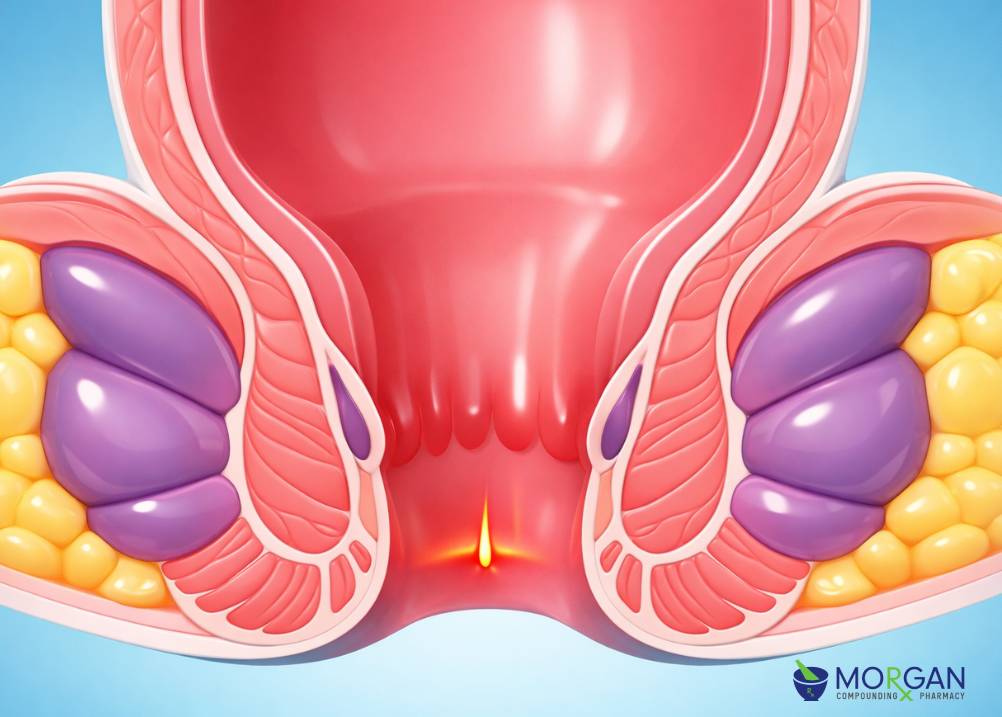
Common Causes of Anal Fissures Include:
- Passing hard or large stools
- Ongoing constipation or repeated straining
- Frequent diarrhea or irritation
- Increased muscle tension in the anal area
Once a fissure forms, symptoms can be difficult to ignore.
Common Signs And Symptoms of Anal Fissures May Include:
- Sharp pain during bowel movements
- Ongoing soreness or burning afterward
- Itching or irritation around the area
- Small amounts of blood on toilet paper
Why Anal Fissures Are Difficult to Heal
Pain tends to persist because fissures don’t always heal easily. As a result, the internal anal sphincter may tighten automatically.
This muscle spasm increases pressure in the area. Consequently, blood flow to the fissure decreases. When circulation is reduced, the tissue has a harder time repairing itself.
Over time, this cycle of pain, spasm, and limited blood flow can keep the fissure from healing. That’s why many approaches focus on relaxing the muscle and improving local circulation.
Topical Calcium Channel Blocker Ointments for Anal Fissures
Topical calcium channel blockers are commonly used off-label prescribed to patients with chronic anal fissures. These medications work by relaxing the internal anal sphincter, which may reduce pressure and improve blood flow to the affected tissue.
Two of the most commonly compounded options are nifedipine ointment and diltiazem ointment. Both medications belong to the calcium channel blocker class but differ slightly in pharmacologic profile and tolerability.
Because commercially manufactured topical versions are limited in the United States, these medications are often prepared by compounding pharmacies based on a healthcare provider’s prescription.
Compounded fissure ointment is prepared through collaboration between the prescriber and a compounding pharmacist, with formulation choices guided by patient response and comfort.
Potential Benefits of Compounded Nifedipine and Diltiazem Ointment:
- Adjustable strengths, based on provider preference and patient response
- Custom bases or components, which may help reduce irritation or sensitivity
- Combination formulations, when more than one medication is prescribed
- A targeted, localized approach, designed to act where it’s applied
- Reduced systemic exposure, compared with oral options
Overall, compounding enables a high degree of personalization. By adjusting formulation details, your prescriber can align the fissure ointment more closely with your needs, comfort level, and clinical considerations.
Commercially manufactured topical nifedipine and diltiazem products for anal fissures are limited in the United States. Because of this, healthcare providers often rely on compounding pharmacies to prepare customized formulations.
Nifedipine vs Diltiazem: What’s the Difference?
Although nifedipine and diltiazem may be used topically for anal fissures, they aren’t identical. They share a similar goal, but their pharmacologic profiles differ in ways that may influence a provider’s choice.
At a basic level, both medications are calcium channel blockers (CCBs). However, they belong to different subclasses.
These subclasses differ in tissue selectivity and pharmacokinetics (PK). In simple terms, this means the medications may behave differently in the body and at the application site.
Because of these differences, a provider may lean toward one option based on a patient’s clinical presentation and specific needs.
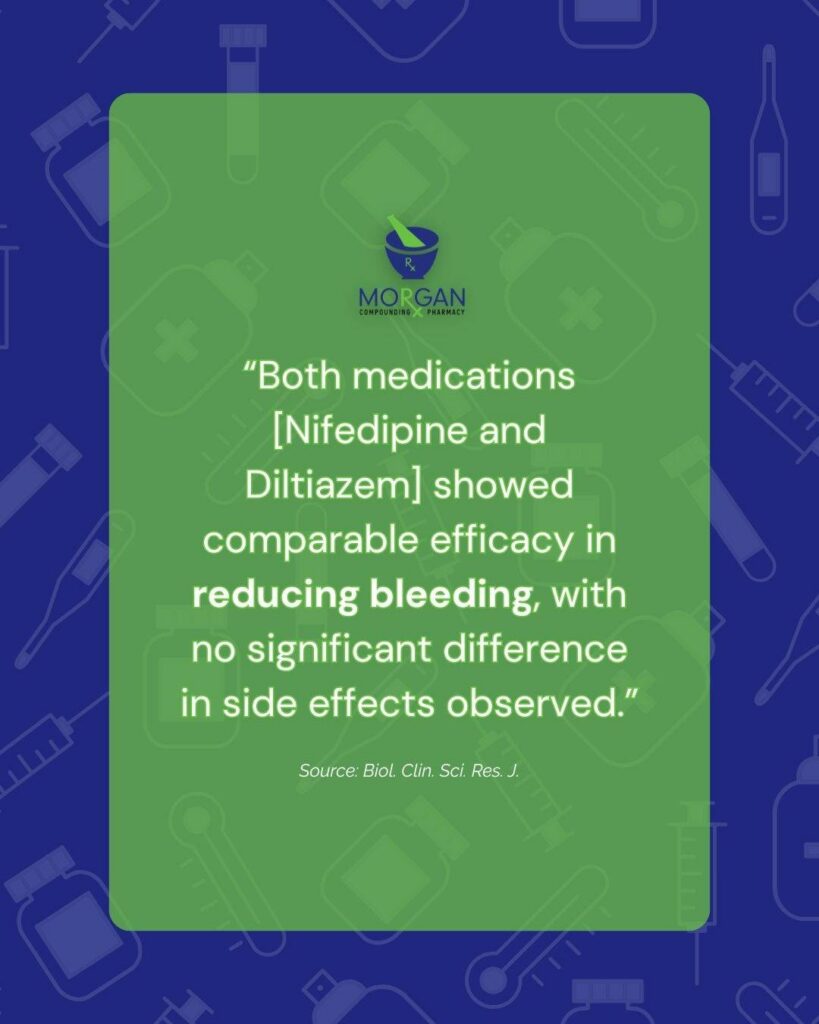
Nifedipine Ointment
Nifedipine is a dihydropyridine CCB
- Topical nifedipine may be selected when faster symptom relief or early response is a priority, especially in acute or very painful cases.
Diltiazem Ointment
- Diltiazem is a benzothiazepine CCB
- Topical diltiazem may be preferred when tolerability is a concern or when a gentler local effect is desired. In some cases, provider experience also plays a role.
Tolerance is an important consideration because individual responses can vary. Some patients may do better with one option over the other, even at similar strengths.
From a broader perspective, either medication may be considered a reasonable topical option for chronic anal fissure. At a population level, long-term healing and recurrence outcomes don’t show major differences between nifedipine and diltiazem.
For that reason, selection often comes down to patient-specific factors, provider judgment, and how the medication is compounded.
Compounded fissure ointments are prescription medications prepared by a compounding pharmacy based on a healthcare provider’s order and individual patient needs.
What Research Says About Topical Nifedipine and Diltiazem
Topical nifedipine and diltiazem have been evaluated in clinical research for their potential to reduce pain and support healing in anal fissures. The published studies below offer insight into how each option may perform in clinical settings.
Topical Nifedipine
- Pain Relief and Healing
Evidence published in the Canadian Journal of Surgery suggests that off-label topical nifedipine, particularly when formulated with lidocaine, may offer improved pain control compared with lidocaine alone.
- Fissure Closure and Pain Reduction
Clinical outcomes reported in Acta Medica Iranica showed that patients using off-label topical nifedipine experienced meaningful pain reduction, along with higher closure rates in chronic anal fissures.
- Mechanism Insight: Sphincter Relaxation
By lowering internal anal sphincter tone, off-label topical nifedipine may address a key physiologic contributor to ongoing fissure pain. A randomized study in Diseases of the Colon & Rectum documented reductions in resting anal pressure with nifedipine-based topical therapy, a change associated with more favorable healing conditions.
Topical Diltiazem
- Clinical Healing and Pain Reduction
Findings published in Diseases of the Colon & Rectum indicate that off-label topical diltiazem may reduce pain and support healing in chronic anal fissures, with generally favorable tolerability.
- Healing Outcomes in Chronic Fissure Care
Research in the British Journal of Surgery reported that off-label topical 2% diltiazem gel supported meaningful healing in a substantial proportion of patients with chronic anal fissures, while maintaining a low rate of adverse effects.
- Symptom Relief and Tolerability in Practice
More recent evidence from the Journal of Family Medicine and Primary Care supports off-label topical diltiazem as a localized option, noting symptom improvement and generally good tolerability in patients with chronic anal fissure.
Who May Benefit From Compounded Fissure Ointments
In situations like these, healthcare providers work closely with a compounding pharmacist to optimize their care plans and the formulation over time.
- Desk-Bound Professional: Spends long hours seated, with fissure pain that intensifies as the day goes on. After reviewing the pattern of symptoms, a provider notes ongoing muscle tension and may prescribe a compounded nifedipine ointment to support localized muscle relaxation and circulation.
- Sensitive-Skin Student: Balances classes and deadlines while experiencing irritation from standard topical products. In response to reported sensitivities, the clinician may order compounded fissure ointment prepared in a gentler base to improve tolerability.
- Stop-and-Start Responder: Has used topical therapies before, with temporary improvement followed by stalled progress. When response to standard strengths appears inconsistent, the physician may request a custom-strength compounded nifedipine formulation tailored to symptom presentation.
- Always-Moving Individual: Maintains an active routine and prefers therapy focused only on the affected area. When symptoms are localized, the prescriber may recommend compounded topical diltiazem as an option designed to act where it’s applied.
- Comfort-First Patient: Experiences fissure pain alongside dryness or irritation. To address both symptom control and comfort, the doctor may prescribe compounded nifedipine or diltiazem combined with soothing components, such as aloe vera, when appropriate.
Rectal diltiazem and nifedipine compounds for anal fissures are prescribed on an individual basis. Specialists such as colorectal surgeons, gastroenterologists, primary care physicians, and family medicine doctors can evaluate symptoms and, when appropriate, work with a compounding pharmacist to develop a customized topical care option.
What to Expect When Using Fissure Ointment
When starting a fissure ointment, strictly follow your provider’s instructions. Application is brief, but sensations may vary.
Some people notice mild effects at first, such as:
- Warmth or tingling at the application site
- Temporary burning or sensitivity
- Mild irritation, especially during early use
These sensations are often short-lived and may ease as the area adjusts.
Using the ointment consistently is important. Regular application helps maintain its local effect and supports muscle relaxation over time.
During therapy, patients are often advised to:
- Pay attention to comfort at the application site
- Note any irritation or sensitivity
- Share symptom changes with their provider
- Follow the application instructions provided by the prescriber
- Maintain soft bowel movements through diet or stool softeners if recommended
If discomfort persists or results aren’t as expected, the care plan can be adjusted. Possible changes may include:
- Modifying the medication strength
- Switching the base or formulation
- Adjusting how often the ointment is applied
This flexibility is one advantage of compounded fissure ointment. With ongoing guidance from a healthcare provider, use can be adjusted to support comfort over time.
For Prescribers: Streamlined Prescribing Process in Georgia
At Morgan Compounding Pharmacy, ordering compounded nifedipine and diltiazem ointments is simple. Our easy-to-use Gastrointestinal & Colon Rectal RX Form lets Georgia prescribers fill out the details with convenience.
Simply note the desired medication, strength, and quantity, and our team will have it prepared. Prescribers can also declare combined formulations, including soothing agents like aloe vera, based on their patients’ needs.
Georgia’s Trusted Colorectal Compounding Pharmacy
Morgan Compounding Pharmacy supports patients managing anal fissures through personalized, prescription-based compounding. We work closely with healthcare providers across Georgia to help align formulations with each patient’s symptoms, tolerability, and clinical goals.
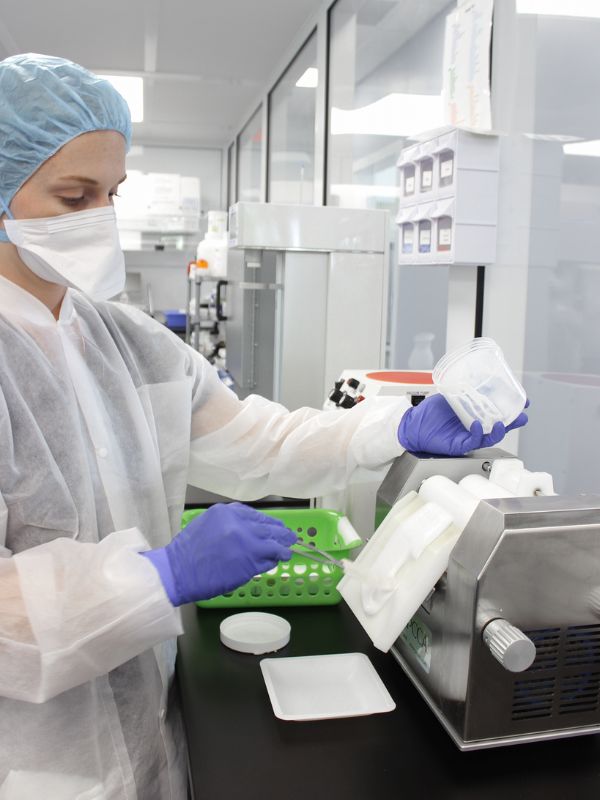
As a PCCA member, our pharmacy follows high standards for quality and precision. Each compounded medication is prepared using carefully sourced ingredients, advanced equipment, and multiple verification steps to support consistency and patient safety.
Why Georgia Patients and Prescribers Choose Morgan Compounding
- Streamlined ordering process for compounded medications
- Convenient prescription refills, including via mobile app
- USP-compliant ingredients with rigorous quality checks
- Broad compounding experience, including colorectal, hormone, and autoimmune care
As a locally owned and operated pharmacy, we serve Alpharetta, Roswell, Milton, Johns Creek, Atlanta, and communities across Georgia. Our goal is to support both patients and prescribers with a responsive, detail-oriented experience.
Start the Conversation
Anal fissures are common and nothing to be embarrassed about. What matters is speaking openly with your healthcare provider about symptoms and comfort concerns.
If you’re a patient exploring additional options, our pharmacists are available to answer questions about compounded fissure ointments and what to expect.
If you’re a prescriber, our team is available to discuss formulation options and how compounding may support individualized care plans.
Frequently Asked Questions About Compounded Anal Fissure Ointments
What ointment may be used for anal fissures?
Healthcare providers sometimes prescribe topical medications such as nifedipine or diltiazem ointment when managing anal fissures. These medications belong to a class known as calcium channel blockers and may be prepared as topical formulations by a compounding pharmacy when prescribed by a licensed provider.
Is nifedipine ointment used for anal fissures?
Topical nifedipine may be prescribed off-label by healthcare providers for patients with anal fissures. In the United States, topical nifedipine products are typically prepared by compounding pharmacies based on an individual prescription.
Is diltiazem ointment used for anal fissures?
Diltiazem may also be prescribed as a topical medication for patients with anal fissures. Like nifedipine, topical diltiazem formulations are often prepared through pharmacy compounding when a provider determines a customized preparation is appropriate.
Are nifedipine and diltiazem ointments FDA-approved for anal fissures?
Topical nifedipine and diltiazem for anal fissures are generally used off-label. Because commercially manufactured topical versions are limited in the United States, healthcare providers may work with compounding pharmacies to prepare these medications when prescribed.
How is compounded fissure ointment obtained?
Compounded fissure ointments are prescription medications. A healthcare provider must evaluate the patient and determine whether a compounded topical preparation is appropriate before sending a prescription to a licensed compounding pharmacy.
Who may prescribe compounded fissure ointment?
Several types of healthcare providers may prescribe compounded topical medications, including colorectal surgeons, gastroenterologists, primary care physicians, and family medicine providers. The prescription is then filled by a licensed compounding pharmacy according to the provider’s instructions.
References
- DasGupta, R., Franklin, I., Pitt, J., & Dawson, P. M. (2002). Successful treatment of chronic anal fissure with diltiazem gel. Colorectal Disease, 4(1), 20–22. Link
- Ekka, N. P., Kujur, A. S., Chandra, S., Lal, S., & Malua, S. (2020). Comparative study to assess the effectiveness of topical Nifedipine and Diltiazem in the treatment of chronic anal fissure. Journal of Family Medicine and Primary Care, 9(11), 5652. Link
- Golfam, F., Golfam, P., Khalaj, A., & Sayed Mortaz, S. S. (2010). The effect of topical nifedipine in treatment of chronic anal fissure. Acta medica Iranica, 48(5), 295–299. Link
- Higuero, T. (2015). Update on the management of anal fissure. Journal of Visceral Surgery, 152(2, Suppl.), S37–S43. Link
- Jonas, M., Neal, K. R., Abercrombie, J. F., & Scholefield, J. H. (2001). A randomized trial of oral vs. topical diltiazem for chronic anal fissures. Diseases of the Colon & Rectum, 44(8), 1074–1078. Link
- Perrotti, P., Bove, A., Antropoli, C., Molino, D., Antropoli, M., Balzano, A., De Stefano, G., & Attena, F. (2002b). Topical Nifedipine With Lidocaine Ointment vs. Active Control for Treatment of Chronic Anal Fissure. Diseases of the Colon & Rectum, 45(11), 1468–1475. Link
- Sadia, Naseer, S., Farooqi, A., Zulfikar, I., Saeed, S., & Shah, H. (2024). Comparison of Effectiveness of Topical Nifedipine and Diltiazem in the Treatment of Anal Fissures. Biological and Clinical Sciences Research Journal, 2024(1), 782. Link
- Sanat, Z. M., Ganjaroudi, N. M., & Mansouri, M. (2023). The Effect of Topical Nifedipine versus Diltiazem on the Acute Anal Fissure: A Randomized Clinical Trial. Middle East Journal of Digestive Diseases, 15(2), 121–125. Link
- Topical nifedipine with lidocaine ointment versus active control for pain after hemorrhoidectomy: results of a multicentre, prospective, randomized, double-blind study. (2010b, February 1). PubMed. Link