

The Food and Drug Administration (FDA), an agency within the U.S. Department of Health and Human Services (HHS), has taken a significant step toward supporting science-based approaches to women’s health. After more than two decades of debate and evolving research, the FDA has initiated the removal of long-standing black box warnings from hormone replacement therapy (HRT) products prescribed for menopause and perimenopause.
The historic decision is guided by modern research and recent randomized studies indicating that HRT may help support women in managing menopausal symptoms. At Morgan Compounding Pharmacy, this progress reinforces a shared commitment to helping prescribers and patients make confident, evidence-based choices in individualized care.
How the FDA HRT Warning Began — and Why It Lasted So Long
Women have used specific prescriptions for years to relieve menopausal symptoms. These include hot flashes, night sweats, and all the frustrating changes that come with hormonal shifts. But everything changed in the early 2000s. Their use plummeted after the FDA HRT warning was applied following results from the Women’s Health Initiative (WHI) study. It reported a statistically non-significant increase in the risk of breast cancer diagnosis. The headlines that followed left many women wary and unsure of what to believe.

However, majority of the public didn’t know about some limits in the findings. The average age of women in the study was 63 years — more than a decade past the typical age of menopause. Also, the researchers gave the participants a hormone formulation no longer in common use today.
Advancing Women’s Health: A New Direction for Hormone Therapy
This latest FDA move didn’t happen overnight. The agency began this process after a detailed scientific review, followed by an expert panel meeting and public comment period.
During that panel, experts weighed both the potential benefits and risks of hormone therapy for menopause — from breast and uterine cancer to heart health, bone strength, and even cognitive function. One major takeaway? The timing of when therapy begins, along with the type, dose, and delivery method, all make a difference.
To keep the process open and inclusive, the FDA invited more voices into the conversation through a public docket, encouraging clinicians, researchers, and patients to share perspectives. The agency wanted feedback on how the most up-to-date science should guide product labeling — especially regarding breast cancer, cardiovascular disease, bone and genitourinary health, and dementia.
After considering all that input, the agency decided to now work with manufacturers to refresh the language on hormone therapy product labels. Mentions of cardiovascular disease, breast cancer, and probable dementia are being removed, reflecting the latest understanding of the data. The FDA HRT warning for endometrial cancer will stay, but only for systemic estrogen-alone products. This keeps safety and transparency at the forefront of care.
“Today, we are standing up for every woman who has symptoms of menopause and is looking to know her options and receive potentially life-changing treatment,”
What We’ve Learned from Modern Research

Recent randomized studies have given experts a clearer understanding of how timing affects the safety and potential benefits of HRT. Research shows that women who begin therapy within 10 years of menopause onset — or before age 60 — may experience better overall outcomes. Data suggest that an earlier start may be linked with a reduction in all-cause mortality and fewer bone fractures over time.
Some studies have also observed that women who start HRT sooner may have a lower risk of cardiovascular disease — by as much as 50% — as well as possible reductions in Alzheimer’s disease risk and bone fractures. While these findings are encouraging, every decision is personal and should be discussed between the patient and her healthcare provider, taking into account health history, age, and goals for care.
For systemic hormone therapy, the FDA now recommends initiation within that 10-year window or before the age of 60 when appropriate. Even so, the timing and duration of therapy remain at decisions made jointly by the patient and her prescriber, guided by medical evaluation and ongoing monitoring.
The Role of Compounding in Personalized HRT
At Morgan Compounding Pharmacy, we prepare Bioidentical Hormone Replacement Therapy (BHRT) to align with each patient’s specific hormonal needs under a prescriber’s direction. BHRT involves hormones chemically identical to those the body produces naturally and compounded in customized strengths and dosage forms. This approach allows providers to consider individualized factors such as stage of menopause and goals when developing a patient’s plan for hormonal support.
Why consider compounding? Because compounding allows for a more individualized approach to hormone care. Our pharmacists collaborate directly with patients and their healthcare providers to develop a BHRT program that reflects individual needs and goals. And as the care plan progresses, formulations can be adjusted under a prescriber’s guidance so that care continues to align with the patient’s goals and ongoing evaluation.
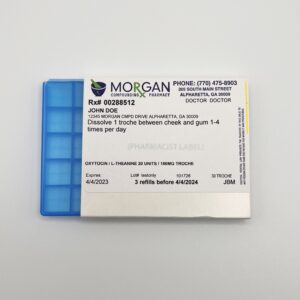
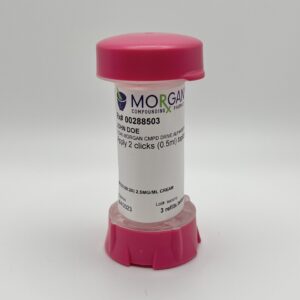
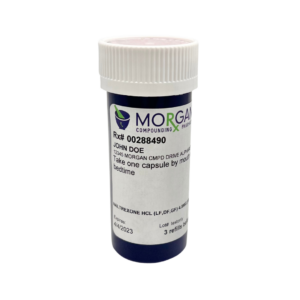
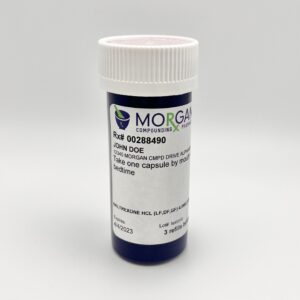
This flexibility in compounding extends beyond hormone strength and formulation — it also gives providers and patients options in how care is delivered. Since no two women are alike, hormone levels naturally vary from person to person.
Working closely with prescribers, our team can prepare BHRT in the dosage form that best fits a patient’s comfort and care plan. Available options may include topical creams or gels, capsules, suppositories, or troches or lozenges.
Want to talk to a hormone expert?
Connect with our experts directly through virtual or in-person consultations.
BHRT Prescription Order Form for Georgia Providers
Our Women’s Health BHRT Prescription Order Form streamlines the process for healthcare providers across Georgia. It includes:
- Hormones available (estriol, estradiol, progesterone)
- Common strengths and combinations (e.g., Bi-Est, Tri-Est)
- Dosage forms and bases
- Administration routes and frequencies
This tool allows prescribers to efficiently choose personalized options for Georgia BHRT plans.
Supporting Providers in Georgia and Beyond
Based in Alpharetta, we serve patients and prescribers throughout Georgia and beyond, working closely with healthcare teams to meet individual patient needs. Every compounded hormone prescription is prepared according to a licensed provider’s order and in alignment with pharmacy compounding standards and best practices.
Whether a patient needs additional support during menopause or a provider is exploring customized dosage forms, Morgan Compounding Pharmacy serves as a trusted resource for collaboration and personalized service.
We are dedicated to supporting prescribers and their patients with compounded hormone services prepared with precision, care, and regulatory compliance.
Contact our team to learn more or request your BHRT Prescription Order Form.
References
- Rossouw, J. E., Anderson, G. L., Prentice, R. L., LaCroix, A. Z., Kooperberg, C., Stefanick, M. L., Jackson, R. D., Beresford, S. a. A., Howard, B. V., Johnson, K. C., Kotchen, J. M., & Ockene, J. (2002). Risks and benefits of estrogen plus progestin in healthy postmenopausal women: principal results from the Women’s Health Initiative randomized controlled trial. JAMA, 288(3), 321–333. Link
- Barrett-Connor, E. (1991). Estrogen and coronary heart disease in women. JAMA, 265(14), 1861. Link
- Paganini-Hill, A. (1996). Estrogen replacement therapy and risk of Alzheimer disease. Archives of Internal Medicine, 156(19), 2213. Link
- Weiss, N. S., Ure, C. L., Ballard, J. H., Williams, A. R., & Daling, J. R. (1980). Decreased Risk of Fractures of the Hip and Lower Forearm with Postmenopausal Use of Estrogen. New England Journal of Medicine, 303(21), 1195–1198. Link